Simple Definition
“How do I start trading?” is a pretty broad question.
Trading is not only about opening an account and pressing buy or sell. Before a beginner starts trading, they need to understand the market, choose what they want to trade, learn a trading style, practice, and build a proper trading plan.
A beginner should not rush into live trading just because they saw someone else making money online.
A better starting point is simple:
Learn the market first. Practice first. Risk small first.
Trading involves risk, and short-term trading can lead to substantial losses quickly, especially when traders use leverage or trade without enough experience. Investor.gov warns that day trading is extremely risky and can result in substantial financial losses in a very short period of time.
Why This Matters
Many beginners start trading in the wrong order.
They open an account first.
They deposit money first.
They follow signals first.
Then they try to learn after losing money.
That is backwards.
A trader should first understand what market they are trading, why prices move, what risk they are taking, and what their trading plan is. Without this foundation, trading becomes emotional.
This matters because trading is not just about finding a good entry. It is also about choosing the right market, using proper risk management, controlling emotions, and knowing when not to trade.
The CFTC warns that speculative trading becomes especially dangerous when traders combine unfamiliar markets, leverage, and advice from anonymous people online.
How It Works
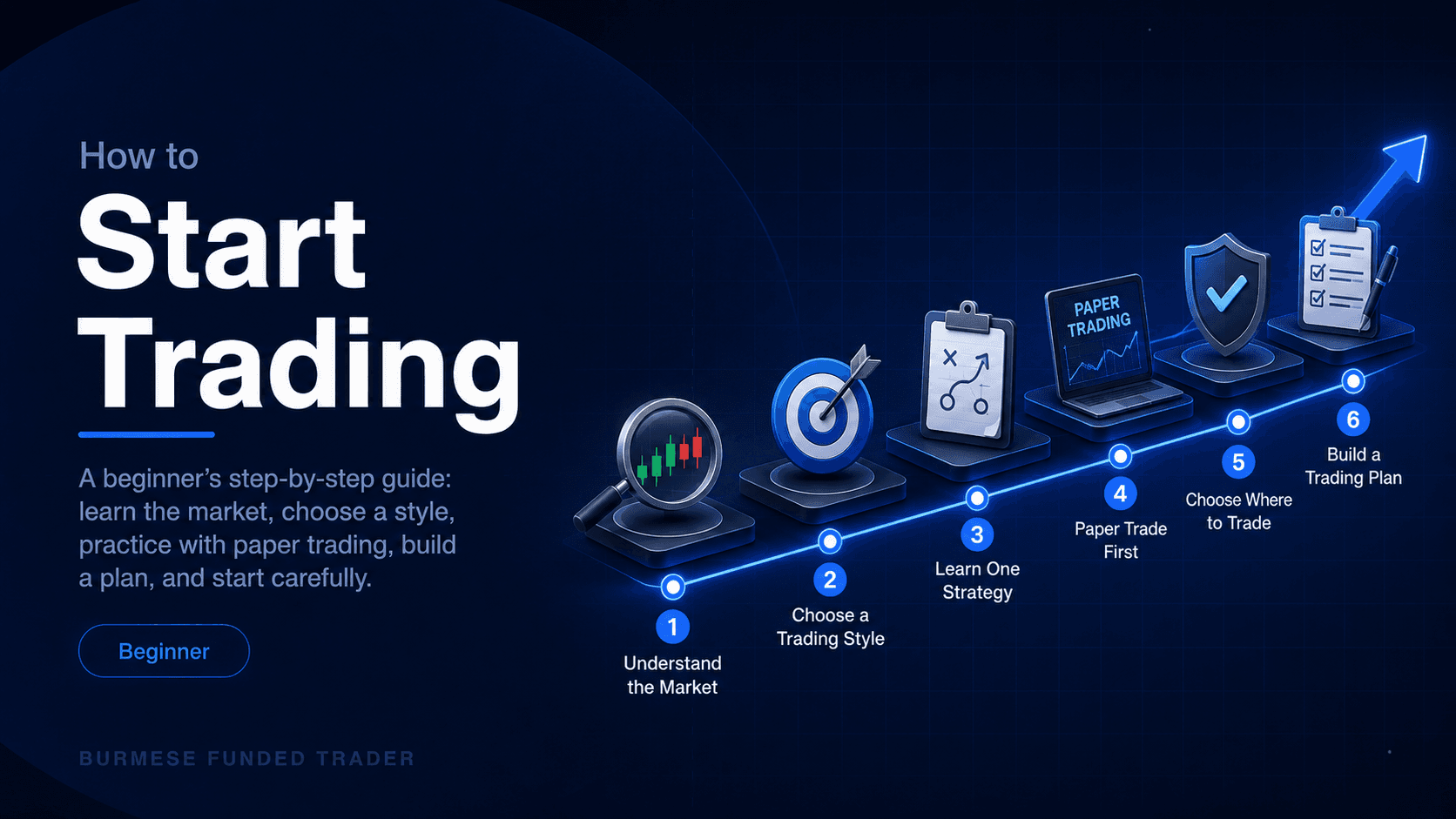
A beginner can start trading by following a simple step-by-step path.
1. Understand the Market First
Before trading, choose one market to learn first.
Examples:
- Forex
- Gold
- Indices
- Stocks
- Crypto
- Commodities
Do not try to trade everything at the same time.
Each market moves differently. Gold can move aggressively during news. Crypto can be highly volatile. Forex involves currency pairs. Stocks are connected to company shares and market news.
Pick one market and study how it moves.
2. Choose a Trading Style
After choosing a market, choose a trading style.
Common styles include:
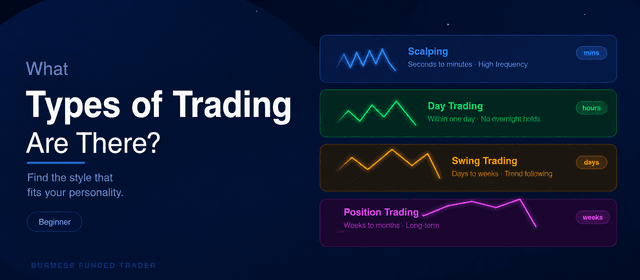
- Scalping — very short-term trades
- Intraday trading — trades opened and closed within the day
- Swing trading — trades held for days or sometimes weeks
A beginner should choose a style that fits their schedule, personality, and risk tolerance.
If you cannot watch charts all day, scalping may not fit you.
If you are impatient, swing trading may feel difficult.
If you trade emotionally, fast trading can make that worse.
3. Learn One Strategy
After choosing a style, learn one strategy.
Do not jump from strategy to strategy every week.
A basic trading strategy should explain:
- What market to trade
- What setup to look for
- Where to enter
- Where to place stop loss
- Where to take profit
- How much to risk
- When not to trade
The strategy does not need to be complicated. But it must be clear enough that you can repeat it.
4. Paper Trade First
Paper trading means practicing with simulated money instead of real money.
This helps beginners learn how orders work, test a strategy, and build confidence without risking real capital. Schwab explains that paper trading lets traders practice strategies with simulated money and should still be done with real-world discipline and risk management.
During paper trading, focus on learning:
- How price moves
- How your strategy performs
- How often you win and lose
- How much drawdown you experience
- Whether you can follow your rules
Paper trading is not the same as real trading because emotions are different when real money is involved. But it is still a useful step before risking capital.
5. Choose Where to Trade Carefully
While paper trading, start researching where you would trade later.
This may be:
- A regulated broker
- A trading platform
- A prop firm evaluation program
If using a broker, check things like regulation, withdrawals, spreads, commissions, platform quality, and customer support. Investor.gov encourages investors to check the background and registration status of investment professionals before trusting them with money.
If using a prop firm, study the rules first. Understand the evaluation model, drawdown, payout process, prohibited strategies, and account structure.
Do not choose a broker or prop firm only because someone on social media recommended it.
6. Build a Trading Plan
After practicing, create a trading plan.
A simple trading plan includes:
- Market
- Trading style
- Strategy
- Risk per trade
- Maximum daily loss
- Stop-loss rule
- Trade management rule
- Journal process
- Review schedule
A trading plan keeps the trader from making random decisions.
Without a plan, every trade becomes emotional.
Simple Example
A beginner wants to start trading.
Instead of jumping into live trading immediately, they choose one market first: gold.
Then they choose a trading style: intraday trading.
Next, they learn one simple strategy using trend, key levels, stop loss, and risk management.
They paper trade for one month and record 50 trades.
After reviewing the results, they notice that risking too much causes large drawdown. So they adjust their plan and decide to risk only 1% per trade.
Then, instead of depositing a large amount, they test themselves with small capital or a prop firm evaluation where the rules force them to manage risk.
That is a much better path than randomly trading with no plan.
Common Mistakes
- Starting with real money before understanding the market
- Trading too many markets at once
- Copying signals without learning
- Changing strategy every few days
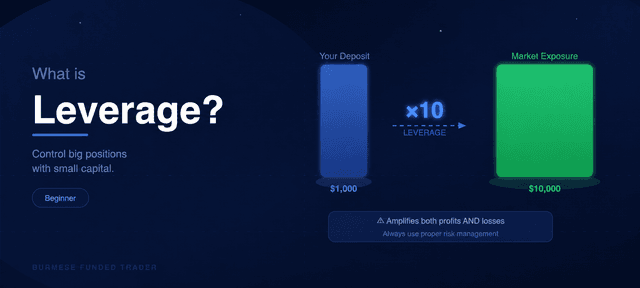
- Using high leverage too early
- Trading without a stop loss
- Choosing a broker or prop firm without reading the rules
BFT Perspective
At BFT, we believe beginners should not rush into trading.
A trader should understand the basics before entering any evaluation program. That means learning the market, choosing a trading style, practicing a strategy, and building a risk plan.
BFT is built around trader development. The goal is not to gamble for fast results. The goal is to become more disciplined, more prepared, and more responsible with risk.
If a trader wants to test their skill with limited capital, a prop firm evaluation can be one option. But it should only be approached after understanding the rules, risks, and expectations.
Nothing in this article is financial advice or a guarantee of profit.
Key Takeaways
- Starting trading is a broad process, not one quick step.
- Choose one market before trying to trade everything.
- Pick a trading style that fits your schedule and personality.
- Learn one strategy and paper trade it first.
- Build a trading plan before risking real money.
- Start with small risk or a structured evaluation before trying to trade larger capital.