Simple Definition
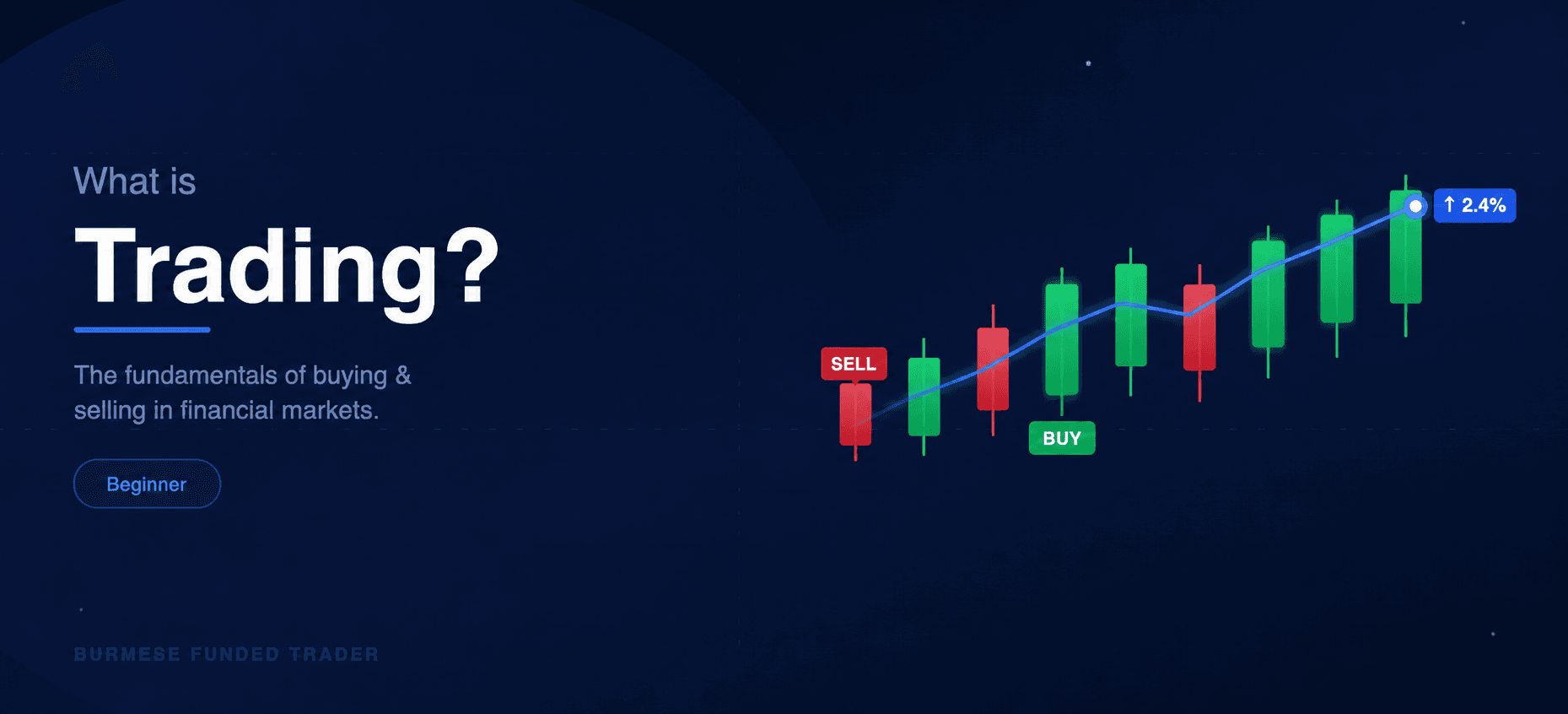
Trading is the process of buying and selling financial assets with the goal of benefiting from price movement.
These assets can include:
- Currencies, also called forex
- Gold and commodities
- Stock indices
- Stocks
- Crypto
- Derivatives or other market products
In simple terms, traders try to make decisions based on whether they believe the price of an asset may go up or down.
If a trader believes price may rise, they may buy.
If a trader believes price may fall, they may sell.
But trading is not just about predicting direction. Real trading requires risk management, discipline, patience, and the ability to follow a plan.
Why This Matters
Many beginners enter trading because they see profit screenshots, lifestyle content, or people talking about quick money.
That is a dangerous way to start.
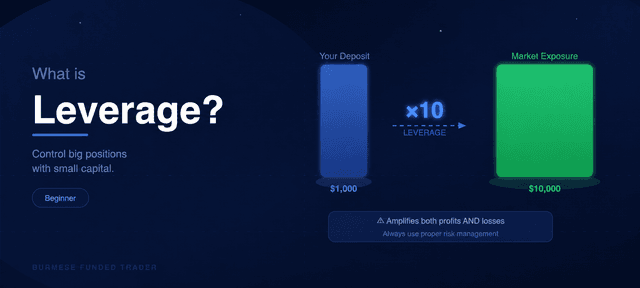
Trading involves real risk. Prices can move quickly, and traders can lose money if they do not understand how markets work. This is why a beginner should first learn the basics before using leverage, joining evaluation programs, or risking capital.
Understanding what trading actually means helps traders avoid treating the market like gambling.
The goal is not just to enter trades.
The goal is to make informed decisions and manage risk properly.
How It Works
A market is where buyers and sellers meet.
Price moves because of supply and demand. When more people want to buy an asset, price may rise. When more people want to sell, price may fall.
A trader normally looks at the market and asks:
- Is the price likely to rise or fall?
- Where is a logical entry?
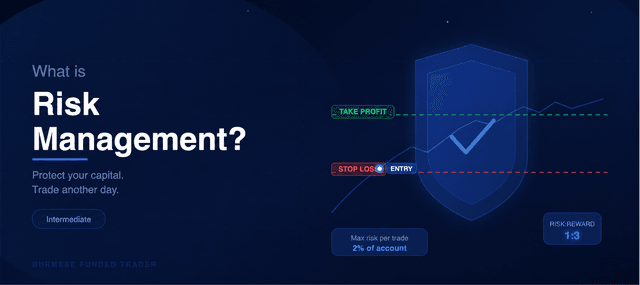
- Where is the stop loss?
- How much am I risking?
- When should I exit?
- Does this trade fit my plan?
There are many ways traders make decisions. Some use technical analysis, such as charts, candlesticks, support, resistance, and trend. Others use fundamental analysis, such as economic news, interest rates, company data, or global events.
Some traders use both.
But no method guarantees profit. Even a good trade idea can lose. That is why risk management is more important than being right every time.
Simple Example
Let’s say gold is trading at 2,350.
A trader believes gold may rise, so they buy.
If gold moves from 2,350 to 2,360, the trader captures a 10-point move. If the trade size is appropriate, this may result in profit.
But if gold drops from 2,350 to 2,340, the trader may lose money.
This is why traders use stop losses. A stop loss is a planned exit point that helps limit the loss if the trade goes against them.
Without a stop loss or risk plan, one bad trade can damage the account.
Common Mistakes
Common beginner mistakes include:
- Trading without understanding risk
- Entering trades emotionally
- Using too much leverage
- Trading without a stop loss
- Risking too much on one trade
- Thinking trading is guaranteed income
- Copying other traders without understanding the reason behind the trade
Most traders do not fail because they lose one trade.
They fail because they do not control risk consistently.
BFT Perspective
At BFT, we believe trading should be approached with discipline, not gambling behavior.
Before joining any evaluation program, traders should understand the basics of trading, risk management, and trading psychology. A trader who does not understand risk will usually struggle with rules, drawdown limits, and account discipline.
BFT is built around trader development. That means learning first, managing risk, and then proving yourself through structured evaluation.
Trading is not about excitement.
Trading is about preparation, execution, and discipline.
Key Takeaways
- Trading means buying and selling financial assets based on price movement.
- Traders can buy if they expect price to rise or sell if they expect price to fall.
- Trading involves risk and does not guarantee profit.
- Risk management is necessary for long-term survival.
- A disciplined trader focuses on process, not emotion.